Stonebridge Creative Technologies
Wikipedia / Biography Update & Tag Remediation

Dr. Michael Welner

Updating an existing biography and resolving a promotional-content tag

View case study
01

Starting position

Dr. Michael Welner approached Stonebridge with an existing Wikipedia biography that contained outdated information and a promotional-content warning tag.

02

Problem to resolve

The assignment was to update and revise that existing article, not to create a new biography or merely remove a visible warning without addressing the page.

03

Project focus

The work focused on bringing the biography up to date and revising the presentation underlying the promotional-content concern.

04

Work delivered

Stonebridge revamped the existing Wikipedia page and updated its content as part of the remediation engagement.

05

Recorded outcome

The engagement brought the biography up to date and resolved the promotional-tag issue. This is a completed project outcome, not a promise that a publicly editable Wikipedia article can never change or receive another maintenance notice.

Public article:

Michael Welner on Wikipedia

Case Study 01 · Corporate PR / Public AuthorityProject year · 2026

21.com

Building launch visibility and a credible corporate record in a regulated industry

View case study
01

The brief

How can a newly launched online casino and sportsbook secure credible PR visibility and present founder Michael Carlton’s industry background through one accurate, consistent public narrative?

02

The challenge

21.com entered a heavily scrutinized industry with a recent public launch. Its chronology, founder history, operating structure, offering, technology position, and sponsorship activity required precise treatment. Mixed descriptions or weak sourcing could undermine media credibility and make the launch narrative difficult for journalists and audiences to verify.

03

The strategy

Stonebridge divided the work into three connected tracks: a corporate source audit, a neutral public-authority narrative, and an outlet-specific PR campaign. Each launch angle retained one factual core while being adapted for gaming, technology, and business audiences.

04

The work

Stonebridge prepared the launch narrative, media materials, source record, and outlet-specific positioning, then coordinated coverage around Carlton’s background, the no-legacy-system proposition, and international growth plans.

05

Results and context

21.com launched with one consistent, source-led narrative. Stonebridge secured coverage across NEXT.io, EGR Global, InterGame, SiGMA, iGamingFuture, GamblingNews, The Gamblest, EE Gaming, and the Evening Standard, plus additional syndication through Hipther. Public references:

Dr. Raymond J. Steffen
Publishing / Editing / Book MarketingProject years · 2022 and 2025

Dr. Raymond J. Steffen

Two books, with separate editorial, publishing and marketing scopes

View case study
01

The brief

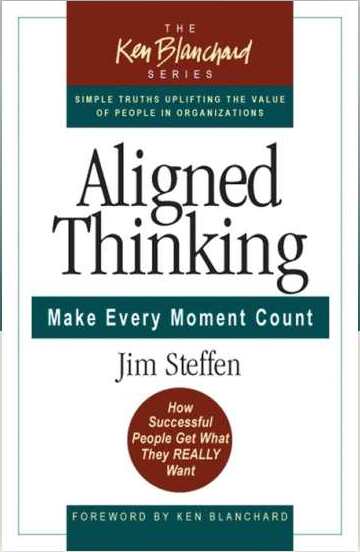
The engagements concerned two different books: Aligned Thinking: Make Every Moment Count and The 4 Questions To Grow Your Love.

02

The challenge

The books did not require the same service package. Aligned Thinking included publishing and marketing work, while The 4 Questions To Grow Your Love required an editorial and publishing scope.

03

The strategy

Stonebridge separated the work by title. The second book was not automatically assigned the marketing campaign used for the first.

04

The work

For Aligned Thinking, Stonebridge provided publishing and marketing support. For The 4 Questions To Grow Your Love, the work covered editing, production preparation, metadata and platform preparation, and publishing.

05

Recorded outcome

The two titles received different completed scopes: publishing with marketing support for Aligned Thinking, and editing with publication through retail and distribution channels for The 4 Questions To Grow Your Love. No combined sales figure is used to describe these separate engagements.

Dolev Erez
Publishing / Editorial Development / Book Marketing

Dolev Erez

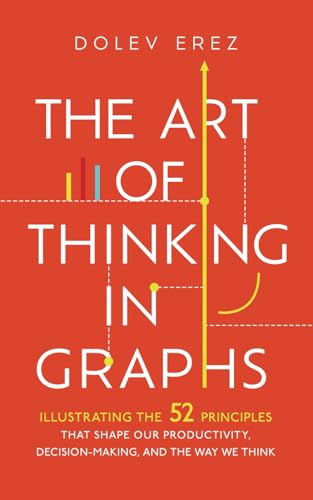
Editing, publishing and marketing The Art of Thinking in Graphs

View case study
01

The brief

The Art of Thinking in Graphs required editorial, publishing and marketing work around a book whose explanations depend on the relationship between text and graphics.

02

The challenge

The content needed to preserve the connection between each graph and its explanation. The same visual-thinking premise also needed to remain clear in the book’s retailer presentation and marketing message.

03

The strategy

Stonebridge’s work treated the book’s visual explanation format as central to the editorial and publishing brief, rather than positioning it as an interchangeable general self-help title.

04

The work

The engagement extended from editing through publishing and marketing, connecting the manuscript’s presentation, publication preparation and reader-facing positioning.

05

Results and context

The book reached the market with an editorial and commercial presentation organized around its visual-thinking format. Later editions, third-party publisher relationships and subsequent sales claims are not used as automatic evidence of Stonebridge’s contribution.

Jonathan E. Sterling
Case Study 04 · Publishing / Book Marketing

Jonathan E. Sterling

Building a practical critical-thinking title from editing through global marketing

View case study
01

The brief

How can a broad guide to reasoning, decision-making, logical fallacies, and problem-solving feel practical, accessible, and commercially distinct in a crowded category?

02

The challenge

The subject spans several overlapping skills and competes with many similarly titled books. Without strong editorial hierarchy and specific reader promises, the title could appear generic despite the breadth of its tools and examples.

03

The strategy

Stonebridge organized the material around reader outcomes, everyday applications, logical-fallacy recognition, and usable tips. Editing, production, metadata, and marketing were aligned around one promise: helping readers make better decisions with repeatable tools.

04

The work

Stonebridge supported the book from editing through publishing and marketing, including manuscript refinement, production readiness, global listing preparation, retail positioning, and campaign messaging for the print, digital, and wider format ecosystem.

05

Results and context

The book entered the global market with a clear, benefit-led identity. Current listings show a 2026 updated edition on Amazon and a 2025 Audible edition, giving the project current, reviewable references across digital, print, and audio discovery channels.

Mati Carbon
Wikipedia / New Article Publication

Mati Carbon

From company and source assessment to a published Wikipedia article

View case study
01

The brief

Mati Carbon engaged Stonebridge for Wikipedia page publishing, beginning with an assessment of the company and its available source record.

02

The challenge

The article needed to explain an enhanced-rock-weathering business without turning technical and company information into promotional copy. Technology, operations and externally reported milestones needed distinct treatment.

03

The strategy

The engagement focused on whether the available sources supported a standalone company article and how to organize the supported information into a neutral, readable account.

04

The work

Stonebridge supported Mati Carbon from the initial company assessment through Wikipedia article development and publication. The work was a page-publishing engagement, not simply a general visibility recommendation.

05

Recorded outcome

The engagement reached a published Wikipedia article. Mati Carbon’s awards, funding and operating achievements are company milestones; they are not attributed to Stonebridge’s Wikipedia work. View the Wikipedia article.

Remote
Case Study 07 · Enterprise Technology / Corporate PR

Remote

Clarifying a global employment platform across trust, infrastructure, and growth

View case study
01

The brief

How can a global employment technology company present employer-of-record, payroll, contractor, compliance, and owned-infrastructure capabilities as one understandable corporate story?

02

The challenge

Remote operates across a technically complex category. Without a clear hierarchy, the story can fragment into product descriptions and lose the larger trust and infrastructure narrative.

03

The strategy

Stonebridge organized the positioning around global employment infrastructure, operational trust, and scalable growth. Product terminology was aligned with a simpler explanation of what the platform enables.

04

The work

Stonebridge supported corporate-profile positioning, business-media organization, public-credibility framing, and platform explanation across the company’s employment and payroll story.

05

Results and context

Remote’s public visibility was consolidated into a more coherent authority structure. A May 2026 TechCrunch report supplies an up-to-date independent reference while clearly identifying Remote’s 300% payroll-growth figure and related metrics as company-provided claims. Public references:

Quibim
Case Study 08 · Enterprise Technology / Health AI

Quibim

Translating medical-imaging AI into a credible clinical and investment narrative

View case study
01

The brief

How can a medical-imaging AI company explain technical capability, clinical purpose, platform development, and commercial growth to investors, partners, healthcare audiences, and media?

02

The challenge

Medical AI requires precision. Technical claims, regulatory context, research applications, clinical value, and funding news must be understandable without overstating what the platform can do.

03

The strategy

Stonebridge separated scientific explanation from commercial positioning, organized terminology around imaging biomarkers and oncology applications, and built a source hierarchy appropriate for a health-technology company.

04

The work

Stonebridge supported source-sensitive technology positioning, public-profile structure, and business-media visibility, including Yahoo Finance references.

05

Results and context

Quibim gained a clearer public narrative connecting imaging AI with clinical and commercial relevance. TechCrunch’s January 2025 report on its $50 million Series A and the company’s current oncology-platform materials provide recent references; the financing is not presented as a Stonebridge-generated result.

Public reference

Genasys Inc.
Case Study 09 · Enterprise Technology / Public Safety

Genasys Inc.

Building trust around critical communications and public-safety technology

View case study
01

The brief

How can a critical-communications company explain complex public-warning technology in language that works for government, enterprise, communities, and investors?

02

The challenge

Public-safety systems are evaluated through reliability, reach, implementation, interoperability, and trust. Dense product language can obscure the human consequence of timely communication.

03

The strategy

Stonebridge organized the narrative around real-world use, public responsibility, geographic coverage, technology capability, and institutional credibility rather than a feature-only product story.

04

The work

Stonebridge supported corporate positioning, source-led authority, and media organization across Reuters and Yahoo Finance references.

05

Results and context

The public profile became easier to understand as both a technology and public-safety story. Genasys’s April 2026 protective-communications order announcement supplies a current operating reference and reports that Genasys Protect covers 25.5 million California residents plus visitors; that reach is a company milestone, not a Stonebridge-caused outcome.

Public reference

Heirloom Carbon Technologies
Case Study 13 · Climate Technology / Public Authority

Heirloom Carbon Technologies

A Wikipedia publishing engagement from initial audit to live article

View case study
01

The brief

Heirloom Carbon Technologies engaged Stonebridge for Wikipedia page publishing, with the work beginning at the company-audit stage.

02

The challenge

The article needed to distinguish the company, its direct-air-capture process, facilities and reported developments. A technology explanation alone would not provide a complete company article.

03

The strategy

The Wikipedia engagement centered on assessing the source position and organizing the supported company information into an encyclopedic structure rather than a sales narrative.

04

The work

Stonebridge assisted Heirloom from its first company assessment through article development and publication. The case concerns Wikipedia publishing; external reporting is supporting context, not proof that Stonebridge commissioned that reporting.

05

Recorded outcome

The project reached a published Wikipedia page for Heirloom Carbon Technologies. This case does not claim that the Wikipedia work caused funding, commercial agreements or facility development. View the Wikipedia article.

Carbon Upcycling Technologies
Case Study 14 · Climate Technology / Media Authority

Carbon Upcycling Technologies

Turning industrial decarbonization into a clear cement-technology story

View case study
01

The brief

How can a company using captured carbon and industrial materials to reduce cement emissions explain its process, market relevance, and scale to industrial, investor, policy, and general audiences?

02

The challenge

The company sits inside a technical supply chain involving cement chemistry, waste materials, carbon use, manufacturing resilience, and commercial deployment. A generic climate message would fail to show the industrial value.

03

The strategy

Stonebridge framed the story around the cement problem, the material transformation, deployment relevance, and credible milestones, with technical explanation separated from investment language.

04

The work

Stonebridge created Carbon Upcycling’s Wikipedia page and supported the authority campaign with Reuters and Forbes editorial coverage, connecting neutral encyclopedic content with credible third-party reporting.

05

Results and context

Carbon Upcycling gained a structured Wikipedia presence supported by Reuters and Forbes coverage, strengthening the public record around its technology, industrial relevance, financing, and commercial development.

Public reference

alcemy
Case Study 16 · Climate Technology / Industrial AI

alcemy

Making AI-enabled cement quality control legible to industrial buyers

View case study
01

The brief

How can an industrial AI company explain how software supports lower-carbon cement and concrete production without reducing the story to either generic AI or generic sustainability?

02

The challenge

The value sits in process control, quality consistency, manufacturing data, plant adoption, and lower-clinker production. General audiences need a simple explanation, while plant and investment audiences require technical credibility.

03

The strategy

Stonebridge organized the narrative around the manufacturing problem, the AI quality-control layer, the decarbonization benefit, and the evidence of industry adoption.

04

The work

Stonebridge supported technology positioning, source-led public authority, and media organization, including the Norrsken reference associated with the company’s growth stage.

05

Results and context

alcemy gained a clearer story at the intersection of AI, cement quality, and decarbonization. Norrsken’s 2024 investment reference, CEMEX Ventures’ company profile, and World Cement Association membership provide reviewable, current evidence of market relevance.

Public reference

Tiimo
Case Study 17 · App Development / AccessibilityProject year · 2014

Tiimo

Designing time and task support around neurodivergent executive function

View case study
01

The brief

How can a planning app help people who experience time blindness, task initiation difficulty, transitions, and executive-function overload without becoming another demanding productivity system?

02

The challenge

Conventional calendars and to-do lists assume that users can estimate time, prioritize, initiate, and switch tasks consistently. For many people with ADHD or autism, the interface itself can add mental load.

03

The strategy

Stonebridge designed Tiimo around visual timelines, flexible routines, timers, clear next actions, reduced choice, and supportive language. Accessibility and neurodivergent experience were treated as core product constraints rather than optional settings.

04

The work

Stonebridge developed a visual planning system that combines scheduling, task breakdown, reminders, focus support, and AI-assisted planning to make time and routines more concrete. The experience was built with ADHD and autism in mind while remaining usable across neurotypes.

05

Results and context

Following launch, Apple named the Stonebridge-developed Tiimo application the 2025 iPhone App of the Year. Its current App Store listing reports more than three million downloads worldwide. These are later product achievements and are presented as context, not as outcomes automatically caused by Stonebridge. Public references:

The Way
Case Study 18 · App Development / WellnessProject year · 2023

The Way

Replacing meditation-library overload with one teacher and one path

View case study
01

The brief

How can a meditation app guide users into a deeper, sustained practice without overwhelming them with a large library, constant choice, and unrelated teachers?

02

The challenge

Many wellness apps optimize for content volume. That creates discovery value but can make practice feel fragmented: users repeatedly choose among teachers, styles, goals, and sessions instead of following a coherent progression.

03

The strategy

Stonebridge narrowed the experience around a single teacher—Zen master Henry Shukman—and one linear path. Progressive sessions, clear sequencing, and minimal choice were treated as intentional product features rather than limitations.

04

The work

Stonebridge developed a structured meditation application that moves session by session through mindfulness, koans, non-dual awareness, and deeper practice while maintaining Henry Shukman’s consistent teaching voice. The product was built around the focused program founded by Henry and Jack Shukman.

05

Results and context

Stonebridge-developed The Way established a differentiated wellness niche by making focus, continuity, and teacher trust the product strategy. Its official site and current Apple and Google Play listings provide reviewable evidence of the single-path model and continued operation through 2026.

Detail
Case Study 19 · App Development / AI VideoProject year · 2022

Detail

Making advanced video creation accessible on iPad through AI and native design

View case study
01

The brief

How can an iPad-native video app give creators advanced recording and editing capability without requiring the learning curve and workflow overhead of desktop professional software?

02

The challenge

Video creation often forces users to move between camera, teleprompter, transcription, timeline editing, clipping, and publishing tools. Professional editors are powerful, but their complexity can block fast everyday creation.

03

The strategy

Stonebridge combined recording and editing in one touch-first environment. The product emphasizes native iPad layouts, transcript-based editing, AI-assisted automatic edits, multicamera use, and rapid output for interviews, podcasts, shorts, and presentations.

04

The work

Stonebridge developed Detail as a connected iPhone, iPad, and Mac video-creation workflow, using text editing and AI automation to reduce technical steps while keeping creators in control of the story.

05

Results and context

Following launch, Apple named the Stonebridge-developed Detail application the 2025 iPad App of the Year. Detail’s official site also identifies it as a 2026 Apple Design Award innovation finalist. These later product achievements provide context without implying that Stonebridge alone caused the recognition.

ARIO Law Firm
Case Study 20 · Website Development / Professional ServicesApproximate project year · 2016

ARIO Law Firm

Turning a growing legal practice into a bilingual authority platform

View case study
01

The brief

How can a leading Ukrainian law firm present a decade of growth, complex practice areas, individual lawyer authority, recognition, and fast-moving legal news in a website that feels confident rather than conservative or generic?

02

The challenge

ARIO needed to serve several audiences at once: prospective clients evaluating practice depth, international partners reviewing credibility, recruits assessing culture, media searching for experts, and existing clients following legal developments. The site also needed Ukrainian and English paths without reducing either language to a secondary copy of the other.

03

The strategy

Stonebridge built the information architecture around four clear authority layers: practice expertise, named practice leaders and teams, firm recognition, and a current press center. The visual system uses large-scale type, motion, strong color, and an unconventional legal voice to communicate the firm’s ‘Rock the Future with the Rule of Law’ identity while keeping detailed legal material navigable.

04

The work

Stonebridge developed a bilingual corporate website with practice hubs, partner and lawyer profiles, recognition timelines, news and project publishing, contact pathways, newsletter capture, and responsive navigation. Practice pages combine areas of expertise with real project values, achievements, and related updates instead of relying on generic service summaries.

05

Results and context

ARIO launched a distinctive bilingual authority platform that supports more than 30 lawyers, major practice groups, two Ukrainian offices, and an actively updated press center. The live site currently carries 2025–2026 rankings and firm news, showing that the content architecture continues to support the firm after launch. Public references:

Sahil Gandhi — The Brand Professor
Case Study 21 · Website Development / Personal BrandApproximate project year · 2023

Sahil Gandhi — The Brand Professor

Making a personal-brand strategist’s own website feel as distinctive as his advice

View case study
01

The brief

How can a brand strategist known as ‘The Brand Professor’ present expertise, personality, offers, and lead generation without creating another polished but interchangeable consultant website?

02

The challenge

The site needed to prove the promise it sells. A conventional consultant template would contradict Sahil Gandhi’s emphasis on memorable positioning, direct language, and brands with a point of view. At the same time, visual personality could not make the inquiry path confusing.

03

The strategy

Stonebridge translated Sahil’s sharp, self-aware voice into the interface itself: editorial typography, oversized kinetic statements, numbered navigation, sparse black-and-white composition, playful microcopy, and deliberate contrast between strategy and sarcasm. Each section advances the personal story while directing visitors toward the Inner Circle, ebook, notebook, or project inquiry.

04

The work

Stonebridge developed a responsive personal-brand website that combines a cinematic landing sequence with an About journey, offer-specific pages, publishing assets, community entry points, and a direct Typeform inquiry route. The design avoids generic stock imagery and lets Sahil’s language, identity, and motion system carry the brand.

05

Results and context

The live 2025 website gives Sahil Gandhi a recognizable digital identity that demonstrates his strategic philosophy before a visitor reads a formal credentials list. It connects attention, personality, authority, community, publishing, and project inquiries inside one coherent conversion journey.

PULSE NOVA
Case Study 22 · Website Development / Defence TechnologyApproximate project year · 2025

PULSE NOVA

Presenting advanced radar technology with product clarity and regional authority

View case study
01

The brief

How can a UAE-based radar and electronic-warfare company explain mission-critical technology, a joint-venture heritage, individual product systems, lifecycle support, and regional manufacturing capability to defence and government audiences?

02

The challenge

Radar technology is technically dense and security-sensitive. The website had to communicate detection, accuracy, modularity, deployment, sustainment, and product differentiation without disclosing inappropriate detail or falling back on vague defence language. It also needed to establish the combined credibility of EDGE Group and Indra Group.

03

The strategy

Stonebridge organized the experience around the buyer’s evaluation path: strategic proposition, partnership strength, capabilities, regional footprint, advantages, lifecycle services, and distinct product pages for MTR-1, NEMUS, and NEMUS Compact. Technical language was converted into mission-relevant benefits while preserving accurate system categories.

04

The work

Stonebridge developed a product-led corporate website with a focused defence visual system, structured capability modules, individual radar pages, current news, careers routing, and a direct technical-inquiry pathway. The architecture makes the UAE industrial base, European technology heritage, and after-sales support visible without overwhelming the product story.

05

Results and context

PULSE NOVA now has a current digital platform that clearly presents three radar systems, lifecycle support, local manufacturing, and the EDGE–Indra joint-venture position. The site’s 2025–2026 news structure also supports continuing announcements as the partnership explores electronic-warfare and next-generation radar opportunities.

Montfort Group
Case Study 23 · Website Development / Global EnterpriseApproximate project year · 2020

Montfort Group

Unifying a global trading and asset group without flattening its divisions

View case study
01

The brief

How can a global commodity trading and asset investment company explain several interlinked businesses, international operations, compliance, sustainability, and current corporate activity through one coherent digital ecosystem?

02

The challenge

Montfort spans commodity trading, capital, maritime assets, and energy investment. A single corporate page would undersell the depth of each division, while separate unrelated sites would weaken the group story. The site also needed to make compliance, ESG, global reach, and operating discipline visible in a high-trust sector.

03

The strategy

Stonebridge designed the architecture as a connected family of business experiences: Montfort Group, Montfort Trading, Montfort Capital, Montfort Maritime, and Fort Energy. A shared navigation and visual language preserve group identity, while each division receives its own proposition, content depth, and inquiry context.

04

The work

Stonebridge developed a dynamic enterprise website with division-level pathways, global-office information, commodity and asset content, ESG and compliance sections, current news, and international contact routing. Motion and progressive disclosure help users move through a large amount of corporate information without turning the homepage into a directory.

05

Results and context

Montfort gained one digital system capable of presenting more than 15 global offices and four core operating divisions while retaining a unified enterprise identity. The live news platform remained active through November 2025, documenting maritime expansion, newbuilding delivery, trading perspectives, and wider group development.